Bexora
Choosing among the leading AI server companies now requires more than comparing processor counts. Global buyers must examine memory bandwidth, cooling design, networking, supply resilience, warranty coverage, and regional service capacity. A server with eight accelerators may look impressive, yet poor airflow can reduce its practical value in a crowded data center.
Industry forecasts show why this market deserves careful review. IDC’s Worldwide AI and Generative AI Spending Guide projects global AI spending will exceed $630 billion by 2028, including infrastructure, software, and services. TrendForce reported that AI server shipments were expected to grow strongly in 2025, supported by demand for large language model training and inference. These figures suggest sustained investment, but forecasts are not guarantees. Energy prices, export controls, chip availability, and financing costs can change purchasing decisions quickly.
NVIDIA CEO Jensen Huang described this shift clearly: “The iPhone moment of AI is here.” His statement captures the urgency, but it does not answer every buyer’s practical question. Dell Technologies, HPE, Lenovo, Supermicro, NVIDIA, and other established vendors differ in architecture, integration, technical support, and delivery performance. Buyers should test real workloads, not rely only on benchmark headlines. That means measuring tokens per second, training time, power consumption, rack density, and downtime risk. Some comparisons remain imperfect. Vendor disclosures are not always consistent. A careful shortlist should therefore combine independent reports, deployment evidence, and local engineering expertise before a global purchase is approved.
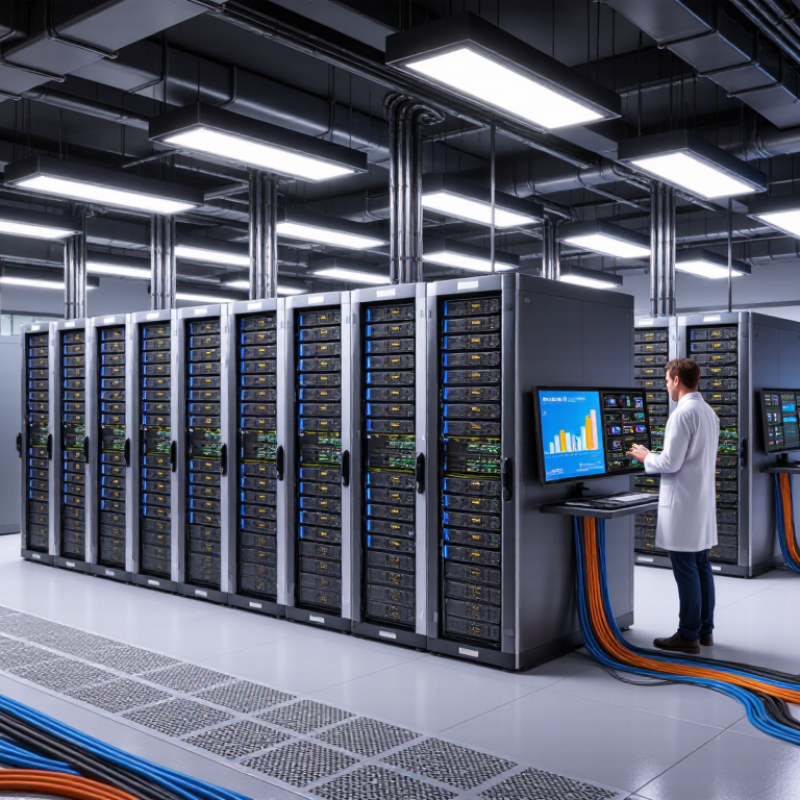
Top AI Server Companies for Global Buyers?
An AI server is more than a rack filled with accelerators. Global buyers should evaluate performance, reliability, serviceability, and operating cost together. A system that performs well in testing may struggle in a crowded data center. Check accelerator memory, processor balance, network bandwidth, storage latency, and expansion options. These details shape real training and inference results.
Power and cooling deserve close attention. A high-density cabinet may require liquid cooling, stronger floor support, and upgraded electrical capacity. Ask for measured power use during sustained workloads, not only peak specifications. Review warranty coverage, replacement procedures, firmware updates, and local technical support. Response time matters when a failed component interrupts a production model. Confirm documentation quality and spare-part availability in each operating region.
Testing should use representative workloads, including model training, batch inference, and smaller interactive requests. Synthetic benchmarks are useful, but they can hide communication delays between nodes. I have seen impressive figures collapse when storage or networking became the bottleneck. That risk is easy to underestimate. Buyers should compare total cost over three to five years, including energy, cooling, software, maintenance, and facility changes. Security controls, data-handling practices, export requirements, and regional certifications also need verification. A careful evaluation may reveal that a slightly slower server offers better uptime and lower operating risk. That trade-off is not always obvious.
Top AI Server Companies for Global Buyers?
Leading AI Server Companies and Their Core Product Strengths
Leading AI server companies compete through specialized strengths, not hardware alone. Some focus on dense accelerator systems for model training and scientific computing. Others prioritize efficient inference, where response speed and power usage matter more than maximum capacity. Strong suppliers usually offer flexible configurations, including high-memory processors, fast interconnects, and storage built for large datasets. In practical testing, these details affect daily performance more than attractive specifications. Cooling design matters too. A well-engineered liquid system can reduce heat around tightly packed components. That supports stable operation in demanding data centers.
Global buyers should examine engineering support, firmware quality, and delivery reliability before signing a contract. Experienced providers document power requirements, rack dimensions, maintenance procedures, and replacement schedules clearly. Regional service teams can shorten downtime when a fan, drive, or accelerator fails. Security controls also deserve attention, especially for systems handling sensitive research or commercial data. No supplier is perfect. A promising configuration may still need better documentation or simpler upgrades. Buyers should request workload demonstrations using their own models and datasets. Synthetic tests can hide bottlenecks. I have seen impressive benchmark results weaken under real network traffic, uneven storage access, or poor thermal conditions. A careful evaluation should measure training time, inference latency, energy use, noise, and total operating cost over several months.
This comparison uses representative technical ranges found in current commercial AI server designs. High-density training systems emphasize accelerator capacity and high-speed networking, while inference systems prioritize energy efficiency, compact form factors, and deployment flexibility.
Choosing an AI server partner requires more than counting accelerators. Hardware affects training speed, memory capacity, cooling, and future upgrades. The Stanford AI Index 2025 reports that global private AI investment reached 150.8 billion dollars in 2024. Buyers therefore need measurable value, not impressive specifications alone.
Ask for benchmark results, power usage, failure rates, and delivery records. A rack should handle real workloads, not only laboratory tests. Small details matter, such as cable routing and replacing a failed power supply within minutes.
Software and integration often separate reliable systems from expensive equipment. Strong providers should support container platforms, scheduling tools, monitoring, security controls, and common model frameworks.
The International Energy Agency estimates that data centers used about 415 terawatt-hours of electricity in 2024. Demand could exceed 945 terawatt-hours by 2030.
Cooling design and workload optimization are now financial issues. Global buyers should check local service coverage, spare-part access, export compliance, and technician training.
Independent testing helps, but it is not perfect. Benchmark scores can hide difficult deployment work. A realistic pilot with production data remains more trustworthy.
Global buyers should judge AI server companies by delivered value, not headline pricing. A low quotation may exclude accelerators, memory upgrades, shipping, installation, or import duties. Request an itemized proposal with currency, payment terms, warranty length, and expected operating costs. Compare power consumption carefully. Electricity can become the largest expense in a busy data center.
Availability also requires evidence. Ask for confirmed inventory, production lead time, and delivery milestones. A supplier promising shipment “soon” creates planning risk. Check whether replacement units and critical components are held near your region. Customs delays, port congestion, and changing export requirements can affect schedules. Keep a realistic buffer. Many purchasing plans are too optimistic.
Technical support often separates a useful supplier from an expensive obstacle. Confirm support hours, response targets, escalation procedures, and remote diagnosis options. Ask whether engineers can assist with driver conflicts, cooling alarms, firmware updates, and cluster integration. Support in the buyer’s time zone matters during overnight failures. Written documentation should include installation diagrams and maintenance steps. References from similar deployments can reveal service quality better than sales presentations. One weakness remains: buyers may overvalue specifications and undervalue support labor. That mistake becomes visible only after deployment.
Choosing an AI server company starts with workload clarity, not a glossy specification sheet. Training large models needs dense accelerator capacity, fast interconnects, and sustained cooling. Inference teams may value low latency, memory efficiency, and predictable regional support. Smaller businesses often need managed deployment and simple scaling. According to IDC’s 2024 forecast, worldwide AI infrastructure spending could exceed 150 billion dollars by 2027. That growth increases choice. It also hides uneven service quality.
Ask each supplier for tested throughput, power draw, failure rates, and replacement times. Request results from workloads resembling yours. The IEA’s Electricity 2024 report estimates global data-center use at about 460 TWh in 2022. It could surpass 1,000 TWh by 2026. Therefore, rack density, cooling design, and energy reporting deserve procurement attention. Security controls, firmware support, and supply-chain documentation matter too. A low purchase price can become expensive downtime. No scorecard is perfect. Pilot testing may reveal uncomfortable gaps.
Tips: Compare three proposals using the same workload, power limit, and service terms. Check local spare-part access and escalation contacts. Include a 12-month operating-cost estimate, not only hardware pricing. Review warranty exclusions carefully. If a supplier avoids measured results, pause. The cheapest option is not always the most reliable.
Evaluate performance, reliability, serviceability, networking, storage, and operating cost together. A fast test result can mislead.
Dense racks may need liquid cooling, stronger floors, and upgraded electrical capacity. Measure power during sustained workloads.
Use realistic training, batch inference, and interactive workloads. Test storage and network delays too. Synthetic results are incomplete.
Include hardware, electricity, cooling, software, maintenance, shipping, duties, and facility changes. Calculate costs across three to five years.
Request confirmed inventory, production lead times, and delivery milestones. Keep a realistic schedule buffer. “Soon” is not evidence.
Confirm support hours, response targets, escalation paths, remote diagnosis, and regional engineers. Overnight failures need timely assistance.
Large training workloads need dense accelerator capacity, fast interconnects, balanced processors, and sustained cooling. Facility limits still matter.
Inference teams may prioritize low latency, memory efficiency, predictable power use, and local technical support. Bigger hardware is not always better.
Managed deployment, simple scaling, clear documentation, and practical support may be more valuable than maximum capacity. Keep the setup understandable.
Be cautious when measured results, replacement times, or warranty exclusions remain unclear. The cheapest proposal may create costly downtime. No scorecard is perfect.
The AI server market is expanding as organizations seek powerful, scalable infrastructure for training, deploying, and managing advanced workloads. Evaluating leading ai server companies requires more than comparing processor or accelerator specifications. Buyers should consider computing performance, memory capacity, energy efficiency, cooling design, system reliability, software compatibility, cybersecurity, and long-term upgrade options. Strong providers typically combine high-quality hardware with optimized management tools, workload support, and flexible system integration services.
Global buyers should also assess total cost of ownership, including purchase price, energy consumption, maintenance, delivery schedules, warranty coverage, and technical support in their region. Availability of components and responsiveness of service teams can significantly affect deployment timelines. The right choice depends on business priorities: research organizations may need maximum computational density, enterprises may value balanced performance and manageability, while growing companies may prefer modular systems that can scale gradually. A careful comparison of hardware, software, integration expertise, pricing, and support will help each organization select an AI server solution aligned with its operational goals.
