Bexora Bexora

How to Choose Top AI Server Manufacturers in 2026?

Time:2026-09-16 Author:Madeline
0%

Choosing the top AI server manufacturers in 2026 requires more than comparing GPU counts or attractive product pages. Buyers must examine the complete infrastructure behind AI performance, including accelerators, memory bandwidth, networking, storage, cooling, power delivery, and technical support. A server that performs well in a laboratory may struggle inside a crowded data center with limited power capacity.

Jensen Huang, NVIDIA’s founder and CEO, has said, “AI is the most powerful technology force of our time.” His statement explains why manufacturer selection now affects long-term business strategy. The strongest vendors should offer validated GPU platforms, flexible configurations, reliable firmware, and clear compatibility with leading AI frameworks. They should also provide practical deployment guidance, not only impressive benchmark figures.

Look beyond peak speed. Study inference latency, training efficiency, rack density, energy use, warranty terms, and replacement procedures. Ask how quickly failed components can be delivered to your region. Inspect the cooling design. In high-density racks, a weak thermal plan can erase the value of expensive hardware.

No ranking is permanent. A trusted manufacturer today may not lead every workload tomorrow. A spreadsheet can still mislead. Enterprise buyers should test representative models, measure total cost of ownership, and speak with existing customers before signing a contract. Independent certifications, transparent documentation, and proven support records add confidence. The best choice is rarely the loudest brand. It is the partner that delivers stable performance, predictable maintenance, and room for future expansion. Mistakes remain possible, especially when forecasts change quickly. That uncertainty deserves honest attention.
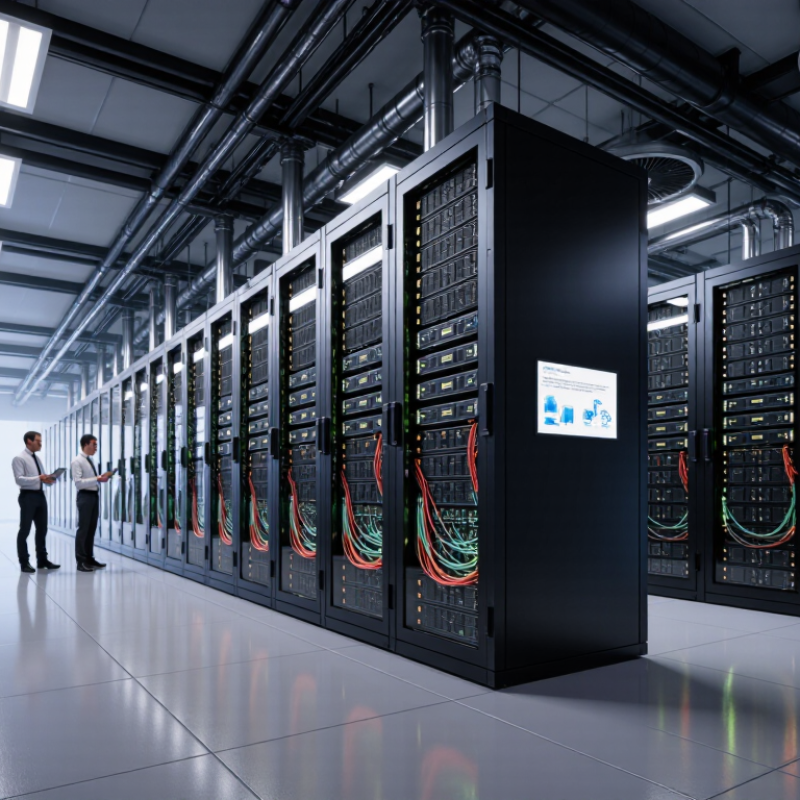
How to Choose Top AI Server Manufacturers in 2026?

Define the Role and Requirements of an AI Server

An AI server is not simply a faster computer. Its role depends on the workload: model training, real-time inference, fine-tuning, or data preparation. Training needs sustained accelerator performance, high memory capacity, and fast interconnects. Inference may value predictable latency, compact design, and efficient power use. Define these requirements before comparing manufacturers.

IDC estimated global AI infrastructure spending at about 154 billion dollars in 2024, with strong growth expected through 2028. That scale makes poor specifications expensive. A practical assessment should measure memory bandwidth, accelerator compatibility, network throughput, storage speed, cooling capacity, and software support. The International Energy Agency reported that data centers used about 415 terawatt-hours of electricity in 2024. Power availability is now a server requirement, not a facility footnote.

Do not trust one benchmark. It can mislead. Test the server with representative datasets, batch sizes, and latency targets. Check performance after several hours, not only during a short demonstration. Engineers should also calculate total cost, including electricity, maintenance, rack space, and future expansion. A lower purchase price may hide higher operating costs. I have seen teams overestimate peak performance and underestimate memory pressure. That mistake is understandable, but still costly. A clear workload profile, documented acceptance test, and independent power review create a more reliable basis for selecting an AI server manufacturer.

Compare GPU Performance, Architecture, and Scalability

Choosing an AI server manufacturer in 2026 requires more than comparing advertised GPU counts. Test performance with your own models, batch sizes, and precision settings. A server that excels on a public benchmark may slow down during retrieval, fine-tuning, or mixed workloads. Measure tokens per second, memory use, power draw, and failure recovery. Keep the test logs.

Architecture determines whether that performance remains useful. Examine GPU memory capacity, memory bandwidth, interconnect speed, CPU balance, and storage paths. Large models may need fast GPU-to-GPU communication, not merely more accelerators. Check cooling design under sustained load; a short benchmark can hide thermal throttling. Noise matters. In practical evaluations, I have seen impressive peak scores collapse after several hours. My early comparisons overvalued peak speed, which was a costly mistake.

Scalability should be tested as a process, not promised in a brochure. Ask whether the manufacturer supports modular GPU expansion, consistent firmware, remote monitoring, and replacement parts. Confirm rack depth, electrical limits, network topology, and service response times. A small deployment may fit today, but training demand can double unexpectedly. Plan twice. Still, expansion is not always wise; software efficiency can beat another expensive server. Require reproducible benchmarks, clear warranty terms, and documented security controls before signing.

Evaluate Manufacturers’ Reliability, Support, and Supply Capacity

When choosing top AI server manufacturers in 2026, test reliability beyond glossy specifications. Uptime Institute’s 2024 Global Data Center Survey found that 54% of reported outages cost more than $100,000. Ask manufacturers for failure-rate records, thermal test results, and documented recovery times. Request evidence from comparable deployments. A clean demo is not enough.

Support quality becomes critical when dense accelerators run continuously. The same Uptime Institute research shows that human error remains a major outage factor, making training and escalation procedures important. Check whether engineers provide 24/7 remote diagnosis, on-site replacement, firmware guidance, and multilingual documentation. Insist on clear service-level commitments. Vague promises create expensive delays.

Supply capacity also needs measurable proof. TrendForce reported that AI server shipments were expected to grow about 28% in 2025, increasing pressure on accelerators, memory, power units, and cooling systems. Evaluate a manufacturer’s component allocation, alternate suppliers, safety stock, and lead-time history. Ask for a 90-day delivery simulation, not only a quotation. My own practical concern is simple: published capacity can hide bottlenecks in one small component. That weakness is easy to miss. Verify it with purchase records, production-site audits, and customer references. A manufacturer that admits constraints may be more dependable than one claiming unlimited availability.

Assess Total Cost, Energy Efficiency, and Data Center Compatibility

Choosing an AI server manufacturer in 2026 requires more than comparing processor prices. In procurement reviews, electricity and cooling often reshape the original budget. The IEA’s Electricity 2024 report estimates that data centers used about 460 TWh globally in 2022. Demand could exceed 1,000 TWh by 2026. Therefore, request measured performance per watt, not only theoretical processing speed. Calculate five-year costs, including electricity, cooling, software, maintenance, rack space, and hardware replacement. A cheap server can become expensive after twelve months.

Energy efficiency also depends on the facility. The U.S. Department of Energy’s 2024 data center report projects American data center electricity use could reach 325 TWh by 2030. Check whether the server supports your site’s voltage, rack depth, airflow design, and cooling method. Liquid cooling may improve dense AI deployments, but it requires trained technicians and compatible plumbing. Network bandwidth matters too. A powerful server can wait uselessly when storage or interconnects are undersized. That detail is easy to miss.

Tips: Ask for independent test results, service-level terms, and full-load power readings. Compare identical workloads. Include idle consumption. Request deployment references from facilities with similar climates and rack limits. Keep a contingency budget for firmware issues and cooling upgrades. Reports help, but they are not the whole truth. A spreadsheet can still lie. Recheck assumptions with a live pilot, even if the pilot feels inconvenient.

Verify Security, Compliance, and Long-Term Technology Plans

Choosing an AI server manufacturer in 2026 requires more than comparing GPU density or delivery dates. Security evidence matters. The 2024 Data Breach Investigations Report found that human involvement appeared in 68% of breaches. Ask manufacturers for secure boot, signed firmware, hardware root of trust, and vulnerability disclosure procedures. Request a sample security advisory, not a polished promise. Test firmware updates in a controlled rack.

Compliance must be practical. Verify ISO 27001 certification, SOC 2 reports, data residency options, and documented access controls. Check whether subcontractors appear in the audit scope. NIST’s AI Risk Management Framework supports traceable governance, but it does not replace legal review. A certificate alone is insufficient. I would inspect evidence retention, incident notification timelines, and administrator logging. Small gaps often survive procurement questionnaires.

Long-term planning deserves equal weight. The IEA’s Electricity 2024 report projects data-center electricity demand could more than double by 2030, exceeding 1,000 terawatt-hours. Select platforms with efficient power delivery, liquid-cooling readiness, modular expansion, and measurable energy reporting. Ask for a three-to-five-year roadmap covering processors, interconnects, firmware support, and spare parts. Plans change. That is normal. Require dated milestones and exit options when promised compatibility slips. A pilot deployment should measure power draw, thermal stability, patch time, and recovery performance under real workloads, not showroom conditions.

How to Choose Top AI Server Manufacturers in 2026?

Use this due-diligence framework to compare manufacturers without relying only on performance claims. Verify security controls, independent compliance evidence, supply-chain transparency, lifecycle commitments, and the supplier’s long-term technology roadmap.

Note: The percentages represent a recommended procurement weighting, not vendor scores or market-share data.

FAQS

How should I compare AI server performance?

Test your own models, batch sizes, and precision settings. Measure tokens per second, memory use, power draw, and recovery time. Public benchmarks can mislead. Keep every test log.

Why does GPU architecture matter?

GPU memory, bandwidth, interconnect speed, and CPU balance affect real workloads. Large models may need fast GPU-to-GPU communication. More accelerators are not always better. I once overvalued peak speed.

How can I detect thermal throttling?

Run workloads for several hours under sustained load. Record temperatures, clock speeds, power use, and output performance. A short test may hide cooling weaknesses. Noise also matters.

What should I check before expanding a server cluster?

Confirm modular GPU expansion, firmware consistency, remote monitoring, and replacement parts. Review rack depth, electrical limits, network design, and service response times. Training demand can double unexpectedly. Plan twice.

Is adding more hardware always the best solution?

No. Software efficiency may improve performance more cheaply. Compare optimization costs with another server’s purchase and operating costs. Expansion can create power and cooling problems. More hardware is not magic.

How can I evaluate manufacturer reliability?

Request failure-rate records, thermal test results, recovery times, and comparable customer evidence. Check whether support includes remote diagnosis and on-site replacement. Require clear service commitments. Promises need proof.

How should I verify component supply capacity?

Ask about component allocation, alternate suppliers, safety stock, and historical lead times. Request a 90-day delivery simulation instead of relying on quotations. Review purchase records and production evidence. Small bottlenecks matter.

What security evidence should an AI server supplier provide?

Look for secure boot, signed firmware, hardware-based trust, and vulnerability disclosure procedures. Request a sample security advisory and test updates in a controlled rack. Review administrator logs and incident notification timelines. Certificates alone are insufficient.

How can I judge long-term technology planning?

Request a three-to-five-year roadmap for processors, interconnects, firmware, and spare parts. Check liquid-cooling readiness, power reporting, and modular expansion options. Require dated milestones and exit options. Plans can change.

Conclusion

Choosing among the top ai server manufacturers in 2026 requires more than comparing product prices or specifications. Organizations should first define the server’s intended role, workload, memory needs, networking requirements, and expected growth. GPU performance, architecture, interconnect technology, and scalability should then be evaluated to ensure the system can support current AI models while adapting to future demands. A balanced assessment should consider both raw computing power and practical deployment flexibility.

Reliability, technical support, production capacity, and delivery stability are equally important when selecting a long-term supplier. Buyers should calculate total cost of ownership, including energy consumption, cooling, maintenance, upgrades, and data center compatibility. Security features, compliance capabilities, data protection measures, and the manufacturer’s technology roadmap should also be verified. By reviewing these factors together, organizations can select an AI server solution that offers dependable performance, manageable operating costs, and sustainable value as their AI infrastructure evolves.

Madeline

Madeline

Madeline is a dedicated marketing professional with a wealth of expertise in our company's core offerings. With a keen understanding of the industry, she brings a unique perspective to her role, consistently delivering high-quality content that highlights the superior aspects of our products. As......